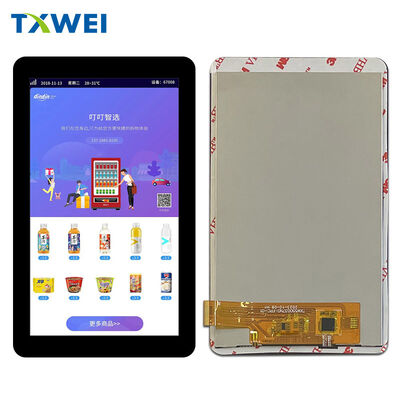
TXW550037N0-SN5.46" FHD+ IPS Display with Integrated Capacitive Touch
━━━━━━━━━━━━━━━━━━━━━━━━━━━━━━━━━━━━━━━━
Overview
The TXW550037N0-SN represents a complete display solution for modern embedded applications. This 5.46-inch module combines a high-resolution IPS LCD panel with a fully integrated capacitive touch panel, delivering exceptional visual performance and intuitive user interaction in a single, compact assembly. Engineered by Shenzhen Tianxianwei Technology, this display targets demanding applications where screen quality, touch responsiveness, and space efficiency cannot be compromised.
◆ ◇ ◆ ◇ ◆ ◇ ◆ ◇ ◆ ◇ ◆ ◇ ◆ ◇ ◆ ◇ ◆
Display Technology
IPS Panel Architecture In-Plane Switching technology sets this module apart from conventional TN displays. The liquid crystal alignment enables consistent color reproduction and contrast ratios across all viewing angles. Users experience the same visual quality whether viewing straight-on or from extreme angles—critical for handheld devices that constantly shift orientation.
Normally Black Mode The panel operates in normally black configuration. When voltage is removed, pixels default to black. This architecture delivers deeper blacks, higher contrast, and reduced light leakage compared to normally white alternatives. Power efficiency improves in dark interface designs.
Active Matrix TFT Thin-Film Transistor active matrix addressing ensures each pixel receives dedicated switching control. No shared electrode crosstalk. No ghosting. Sharp edges on fast-moving graphics.
✦ ────── ✦ ────── ✦ ────── ✦ ────── ✦
Resolution & Pixel Architecture
Full HD+ Resolution 1080 pixels horizontally. 1920 pixels vertically. This 9:16 aspect ratio suits portrait-oriented applications—smartphones, handheld terminals, vertical industrial panels.
RGB Stripe Arrangement Subpixels organized in vertical RGB stripes. Natural color blending at normal viewing distances. Optimal for photographic content and color-critical interfaces.
Pixel Pitch 63 micrometers horizontal. 63 micrometers vertical. 401 pixels per inch equivalent. Individual pixels invisible at typical 300mm viewing distance. Smooth gradients. Crisp text.
Active Display Area 68.04 mm width × 120.96 mm height. Generous screen real estate in compact physical envelope.
LCD Module Dimensions 78.00 mm module width. 129.76 mm module height. 1.95 mm total thickness. Remarkably slim profile enables modern industrial design aesthetics.
Complete Assembly with Touch 83.70 mm assembly width. 141.20 mm assembly height. 3.20 mm total thickness. The additional 1.25 mm accommodates the capacitive touch layer and cover glass without excessive bulk.
Weight To be determined based on final cover glass specification. Optimized for portable applications where every gram matters.
FPC Connector 39-pin flexible printed circuit. Compact connector footprint. Reliable board-to-display interconnection. Designed for automated assembly processes.
▸▸▸▸▸▸▸▸▸▸▸▸▸▸▸▸▸▸▸▸▸▸▸▸▸▸▸▸▸▸▸▸▸▸▸▸▸▸▸▸▸▸▸▸▸
Capacitive Touch Panel
G+G Construction Cover Glass + Sensor Glass architecture. Two discrete glass layers bonded with optically clear adhesive. Superior durability compared to film-based alternatives. Premium tactile response.
Physical Stackup 0.55 mm cover glass thickness. OCA lamination layer. ITO sensor glass. Total touch module thickness: 1.45 ± 0.10 mm. Robust yet refined.
Controller Integration CST340 touch controller in Chip-on-Flex configuration. Dedicated processing unit offloads touch computation from host microcontroller. 100 Hz typical report rate. Smooth tracking.
Multi-Touch Capability Five-point simultaneous touch recognition. Complex gestures supported. Pinch-to-zoom. Two-finger rotate. Multi-button press. Modern user interface requirements satisfied.
Communication Interface I2C standard protocol. SCL clock line. SDA data line. INT interrupt output for event notification. Compatible with virtually all modern microcontrollers and application processors.
Operating Parameters 2.8V to 3.3V supply range. -20°C to +60°C functional temperature. <10 mW typical operating power. Efficient for battery-powered designs.
◈◈◈◈◈◈◈◈◈◈◈◈◈◈◈◈◈◈◈◈◈◈◈◈◈◈◈◈◈◈◈◈◈◈◈◈◈◈◈◈
Interface & Signaling
MIPI DSI Standard 4-lane Mobile Industry Processor Interface - Display Serial Interface. Industry standard for high-speed display connectivity. Differential signaling. Low EMI. Robust noise immunity.
Data Lanes D0, D1, D2, D3 differential pairs. Four parallel data channels. 1 Gbps per lane typical. Aggregate bandwidth sufficient for 60 Hz Full HD+ refresh with 24-bit color depth.
Clock Architecture Dedicated CLK differential pair. Source-synchronous timing. Simplified system clocking. No complex skew management required.
Command vs. Video Modes Command mode for register configuration. Video mode for real-time pixel streaming. Flexible system integration. Low-power static image capability.
✧・゚: ✧・゚: ・゚✧:・゚✧ ✧・゚: ・゚✧:・゚✧
Electrical Characteristics
Core Supply (VDD) 2.5V minimum. 3.3V typical. 3.6V maximum. Analog power for internal DC-DC converters and reference circuits. Stable regulation essential for flicker-free operation.
I/O Supply (IOVCC) 1.65V minimum. 1.8V typical. 3.3V maximum. Logic level compatibility. Direct connection to 1.8V or 3.3V host processors without level translation.
Gate Drive Voltages VGH: 11V typical. Positive gate drive for TFT switching. VGL: -7V typical. Negative gate drive for complete pixel turn-off. Generated internally by charge pump circuits.
Common Electrode (VCOM) Tunable reference voltage. -2V to 0V adjustment range. Factory-calibrated for minimum flicker. Field-adjustable for application-specific optimization.
Current Consumption To be characterized based on display content and backlight setting. Typical operating current available in detailed electrical specification.
┏━━━━━━━━━━━━━━━━━━━━━━━━━━━━━━━━━━━━━━┓ ┃ BACKLIGHT SYSTEM ┃ ┗━━━━━━━━━━━━━━━━━━━━━━━━━━━━━━━━━━━━━━┛
LED Configuration 36 white LEDs total. Edge-lit architecture. Light guided across full panel width through precision optical films. 18 parallel electrical strings. 2 series LEDs per string.
Electrical Requirements Forward voltage: 11.2V minimum. 12.8V maximum. 12V nominal design point. Forward current: 360 mA typical for full brightness. Individual LED current: 20 mA.
Luminance Performance 2000 cd/m² typical with LCD and CTP in optical stack. Bright enough for indoor and shaded outdoor environments. Readable under office lighting and daylight ambient conditions.
Uniformity 80% minimum brightness uniformity across active area. No visible hot spots. Consistent illumination for professional appearance.
Longevity 20,000 hour LED lifetime rating. Defined as 50% brightness retention operating at 20 mA per LED. Extended lifetime achievable with current derating and thermal management.
Control Interface 4 × LEDA anode connections. 4 × LEDK cathode connections. Distributed current paths. Reduced resistive losses. PWM dimming compatible for brightness adjustment.
Reset Requirements RESX pin active-low reset. Minimum 1 ms pulse width. 5 ms initialization period following release. Internal OTP loads factory calibration data. Stable operation guaranteed after reset completion.
Tearing Effect Prevention TE signal output. Frame synchronization pulse. MCU coordinates memory updates with display refresh. Eliminates visible tearing on dynamic content.
Power-On Sequence Staged voltage application required. VDD1/HS_VCC first. VDD3 following. RESX release after stabilization. MIPI lanes in LP11 state during initialization. 50 ms minimum before video transmission. 120 ms display ready from power application.
Sleep Mode SLPIN command entry. Display off. Touch active optional. Reduced power consumption. Rapid resume to full operation. Ideal for battery conservation between user interactions.
Power-Off Sequence SLPIN command first. Video stop. 3 frame minimum before power removal. VDD3 off. VDD1/HS_VCC off. Prevents electrical stress and visual artifacts.
◆ ◇ ◆ ◇ ◆ ◇ ◆ ◇ ◆ ◇ ◆ ◇ ◆ ◇ ◆ ◇ ◆
Environmental Specifications
Operating Temperature -20°C to +60°C for both display and touch functions. Cold-start capable. No condensation requirements. Full specification compliance across range.
Storage Temperature -30°C to +70°C non-operating. Extended shelf life. Transport and warehouse flexibility.
Thermal Shock Resistance Validated to 10 cycles. -20°C exposure, 30 minutes. Transition to +60°C, 30 minutes. Static state testing. No mechanical failure. No performance degradation.
High Temperature Operating +60°C continuous operation. 96-hour validation. No image sticking. No color shift.
Low Temperature Operating -20°C sustained operation. 96-hour validation. Response time within specification. Touch functional.
High Temperature Storage +70°C storage. 96-hour exposure. Post-test functional verification required.
Low Temperature Storage -30°C storage. 96-hour exposure. No physical damage. No seal compromise.
Humidity Storage 50°C at 90% RH. 96-hour exposure. No bubble formation. No polarizer delamination. No frame rainbow effects.
Reliability Validation Temperature cycling. Mechanical shock. Vibration resistance. ESD immunity. Drop testing per application requirements.
Acceptance Criteria Zero tolerance for missing segments. No electrical shorts. No unclear segments. No non-display conditions. No abnormal display patterns. No liquid crystal leakage. Seal integrity mandatory.
Mechanical Integration Four-edge mounting support recommended. Avoid concentrated loads on center area. Maintain 0.5 mm minimum clearance to conductive elements. ESD protection during handling mandatory.
Thermal Management LED heat dissipation path design required. Maximum junction temperature 85°C. Copper area or thermal vias in LED anode PCB region. Ambient temperature derating for sealed enclosures.
Electrical Design Separate ground planes for digital and analog recommended. Star grounding at power entry. MIPI trace length matching within 5 mm. 100 Ω differential impedance. Shielding for EMI-sensitive applications.
Software Integration Himax HX8399C initialization sequence required. Command set documentation available. Touch controller firmware update capability via I2C. Gesture recognition libraries available from CST.
Optical Stack Considerations Cover lens customization available. AR coating options. AG surface treatment. Privacy filters. Custom cutouts and shapes. Consult factory for optical bonding services.
◈◈◈◈◈◈◈◈◈◈◈◈◈◈◈◈◈◈◈◈◈◈◈◈◈◈◈◈◈◈◈◈◈◈◈◈◈◈◈◈
Applications
Medical handheld diagnostic devices. Patient monitoring terminals. Portable ultrasound systems. Industrial process controllers. Field service tablets. Smart home control panels. Building automation interfaces. Test and measurement equipment. Mobile point-of-sale terminals. Inventory management handhelds. Security system keypads. Automotive aftermarket displays. Marine navigation instruments. Outdoor kiosks with shade. Educational electronics. Prototyping and development platforms.
TXW550037N0-SN5.46" FHD+ IPS Display with Integrated Capacitive Touch
━━━━━━━━━━━━━━━━━━━━━━━━━━━━━━━━━━━━━━━━
Overview
The TXW550037N0-SN represents a complete display solution for modern embedded applications. This 5.46-inch module combines a high-resolution IPS LCD panel with a fully integrated capacitive touch panel, delivering exceptional visual performance and intuitive user interaction in a single, compact assembly. Engineered by Shenzhen Tianxianwei Technology, this display targets demanding applications where screen quality, touch responsiveness, and space efficiency cannot be compromised.
◆ ◇ ◆ ◇ ◆ ◇ ◆ ◇ ◆ ◇ ◆ ◇ ◆ ◇ ◆ ◇ ◆
Display Technology
IPS Panel Architecture In-Plane Switching technology sets this module apart from conventional TN displays. The liquid crystal alignment enables consistent color reproduction and contrast ratios across all viewing angles. Users experience the same visual quality whether viewing straight-on or from extreme angles—critical for handheld devices that constantly shift orientation.
Normally Black Mode The panel operates in normally black configuration. When voltage is removed, pixels default to black. This architecture delivers deeper blacks, higher contrast, and reduced light leakage compared to normally white alternatives. Power efficiency improves in dark interface designs.
Active Matrix TFT Thin-Film Transistor active matrix addressing ensures each pixel receives dedicated switching control. No shared electrode crosstalk. No ghosting. Sharp edges on fast-moving graphics.
✦ ────── ✦ ────── ✦ ────── ✦ ────── ✦
Resolution & Pixel Architecture
Full HD+ Resolution 1080 pixels horizontally. 1920 pixels vertically. This 9:16 aspect ratio suits portrait-oriented applications—smartphones, handheld terminals, vertical industrial panels.
RGB Stripe Arrangement Subpixels organized in vertical RGB stripes. Natural color blending at normal viewing distances. Optimal for photographic content and color-critical interfaces.
Pixel Pitch 63 micrometers horizontal. 63 micrometers vertical. 401 pixels per inch equivalent. Individual pixels invisible at typical 300mm viewing distance. Smooth gradients. Crisp text.
Active Display Area 68.04 mm width × 120.96 mm height. Generous screen real estate in compact physical envelope.
LCD Module Dimensions 78.00 mm module width. 129.76 mm module height. 1.95 mm total thickness. Remarkably slim profile enables modern industrial design aesthetics.
Complete Assembly with Touch 83.70 mm assembly width. 141.20 mm assembly height. 3.20 mm total thickness. The additional 1.25 mm accommodates the capacitive touch layer and cover glass without excessive bulk.
Weight To be determined based on final cover glass specification. Optimized for portable applications where every gram matters.
FPC Connector 39-pin flexible printed circuit. Compact connector footprint. Reliable board-to-display interconnection. Designed for automated assembly processes.
▸▸▸▸▸▸▸▸▸▸▸▸▸▸▸▸▸▸▸▸▸▸▸▸▸▸▸▸▸▸▸▸▸▸▸▸▸▸▸▸▸▸▸▸▸
Capacitive Touch Panel
G+G Construction Cover Glass + Sensor Glass architecture. Two discrete glass layers bonded with optically clear adhesive. Superior durability compared to film-based alternatives. Premium tactile response.
Physical Stackup 0.55 mm cover glass thickness. OCA lamination layer. ITO sensor glass. Total touch module thickness: 1.45 ± 0.10 mm. Robust yet refined.
Controller Integration CST340 touch controller in Chip-on-Flex configuration. Dedicated processing unit offloads touch computation from host microcontroller. 100 Hz typical report rate. Smooth tracking.
Multi-Touch Capability Five-point simultaneous touch recognition. Complex gestures supported. Pinch-to-zoom. Two-finger rotate. Multi-button press. Modern user interface requirements satisfied.
Communication Interface I2C standard protocol. SCL clock line. SDA data line. INT interrupt output for event notification. Compatible with virtually all modern microcontrollers and application processors.
Operating Parameters 2.8V to 3.3V supply range. -20°C to +60°C functional temperature. <10 mW typical operating power. Efficient for battery-powered designs.
◈◈◈◈◈◈◈◈◈◈◈◈◈◈◈◈◈◈◈◈◈◈◈◈◈◈◈◈◈◈◈◈◈◈◈◈◈◈◈◈
Interface & Signaling
MIPI DSI Standard 4-lane Mobile Industry Processor Interface - Display Serial Interface. Industry standard for high-speed display connectivity. Differential signaling. Low EMI. Robust noise immunity.
Data Lanes D0, D1, D2, D3 differential pairs. Four parallel data channels. 1 Gbps per lane typical. Aggregate bandwidth sufficient for 60 Hz Full HD+ refresh with 24-bit color depth.
Clock Architecture Dedicated CLK differential pair. Source-synchronous timing. Simplified system clocking. No complex skew management required.
Command vs. Video Modes Command mode for register configuration. Video mode for real-time pixel streaming. Flexible system integration. Low-power static image capability.
✧・゚: ✧・゚: ・゚✧:・゚✧ ✧・゚: ・゚✧:・゚✧
Electrical Characteristics
Core Supply (VDD) 2.5V minimum. 3.3V typical. 3.6V maximum. Analog power for internal DC-DC converters and reference circuits. Stable regulation essential for flicker-free operation.
I/O Supply (IOVCC) 1.65V minimum. 1.8V typical. 3.3V maximum. Logic level compatibility. Direct connection to 1.8V or 3.3V host processors without level translation.
Gate Drive Voltages VGH: 11V typical. Positive gate drive for TFT switching. VGL: -7V typical. Negative gate drive for complete pixel turn-off. Generated internally by charge pump circuits.
Common Electrode (VCOM) Tunable reference voltage. -2V to 0V adjustment range. Factory-calibrated for minimum flicker. Field-adjustable for application-specific optimization.
Current Consumption To be characterized based on display content and backlight setting. Typical operating current available in detailed electrical specification.
┏━━━━━━━━━━━━━━━━━━━━━━━━━━━━━━━━━━━━━━┓ ┃ BACKLIGHT SYSTEM ┃ ┗━━━━━━━━━━━━━━━━━━━━━━━━━━━━━━━━━━━━━━┛
LED Configuration 36 white LEDs total. Edge-lit architecture. Light guided across full panel width through precision optical films. 18 parallel electrical strings. 2 series LEDs per string.
Electrical Requirements Forward voltage: 11.2V minimum. 12.8V maximum. 12V nominal design point. Forward current: 360 mA typical for full brightness. Individual LED current: 20 mA.
Luminance Performance 2000 cd/m² typical with LCD and CTP in optical stack. Bright enough for indoor and shaded outdoor environments. Readable under office lighting and daylight ambient conditions.
Uniformity 80% minimum brightness uniformity across active area. No visible hot spots. Consistent illumination for professional appearance.
Longevity 20,000 hour LED lifetime rating. Defined as 50% brightness retention operating at 20 mA per LED. Extended lifetime achievable with current derating and thermal management.
Control Interface 4 × LEDA anode connections. 4 × LEDK cathode connections. Distributed current paths. Reduced resistive losses. PWM dimming compatible for brightness adjustment.
Reset Requirements RESX pin active-low reset. Minimum 1 ms pulse width. 5 ms initialization period following release. Internal OTP loads factory calibration data. Stable operation guaranteed after reset completion.
Tearing Effect Prevention TE signal output. Frame synchronization pulse. MCU coordinates memory updates with display refresh. Eliminates visible tearing on dynamic content.
Power-On Sequence Staged voltage application required. VDD1/HS_VCC first. VDD3 following. RESX release after stabilization. MIPI lanes in LP11 state during initialization. 50 ms minimum before video transmission. 120 ms display ready from power application.
Sleep Mode SLPIN command entry. Display off. Touch active optional. Reduced power consumption. Rapid resume to full operation. Ideal for battery conservation between user interactions.
Power-Off Sequence SLPIN command first. Video stop. 3 frame minimum before power removal. VDD3 off. VDD1/HS_VCC off. Prevents electrical stress and visual artifacts.
◆ ◇ ◆ ◇ ◆ ◇ ◆ ◇ ◆ ◇ ◆ ◇ ◆ ◇ ◆ ◇ ◆
Environmental Specifications
Operating Temperature -20°C to +60°C for both display and touch functions. Cold-start capable. No condensation requirements. Full specification compliance across range.
Storage Temperature -30°C to +70°C non-operating. Extended shelf life. Transport and warehouse flexibility.
Thermal Shock Resistance Validated to 10 cycles. -20°C exposure, 30 minutes. Transition to +60°C, 30 minutes. Static state testing. No mechanical failure. No performance degradation.
High Temperature Operating +60°C continuous operation. 96-hour validation. No image sticking. No color shift.
Low Temperature Operating -20°C sustained operation. 96-hour validation. Response time within specification. Touch functional.
High Temperature Storage +70°C storage. 96-hour exposure. Post-test functional verification required.
Low Temperature Storage -30°C storage. 96-hour exposure. No physical damage. No seal compromise.
Humidity Storage 50°C at 90% RH. 96-hour exposure. No bubble formation. No polarizer delamination. No frame rainbow effects.
Reliability Validation Temperature cycling. Mechanical shock. Vibration resistance. ESD immunity. Drop testing per application requirements.
Acceptance Criteria Zero tolerance for missing segments. No electrical shorts. No unclear segments. No non-display conditions. No abnormal display patterns. No liquid crystal leakage. Seal integrity mandatory.
Mechanical Integration Four-edge mounting support recommended. Avoid concentrated loads on center area. Maintain 0.5 mm minimum clearance to conductive elements. ESD protection during handling mandatory.
Thermal Management LED heat dissipation path design required. Maximum junction temperature 85°C. Copper area or thermal vias in LED anode PCB region. Ambient temperature derating for sealed enclosures.
Electrical Design Separate ground planes for digital and analog recommended. Star grounding at power entry. MIPI trace length matching within 5 mm. 100 Ω differential impedance. Shielding for EMI-sensitive applications.
Software Integration Himax HX8399C initialization sequence required. Command set documentation available. Touch controller firmware update capability via I2C. Gesture recognition libraries available from CST.
Optical Stack Considerations Cover lens customization available. AR coating options. AG surface treatment. Privacy filters. Custom cutouts and shapes. Consult factory for optical bonding services.
◈◈◈◈◈◈◈◈◈◈◈◈◈◈◈◈◈◈◈◈◈◈◈◈◈◈◈◈◈◈◈◈◈◈◈◈◈◈◈◈
Applications
Medical handheld diagnostic devices. Patient monitoring terminals. Portable ultrasound systems. Industrial process controllers. Field service tablets. Smart home control panels. Building automation interfaces. Test and measurement equipment. Mobile point-of-sale terminals. Inventory management handhelds. Security system keypads. Automotive aftermarket displays. Marine navigation instruments. Outdoor kiosks with shade. Educational electronics. Prototyping and development platforms.